

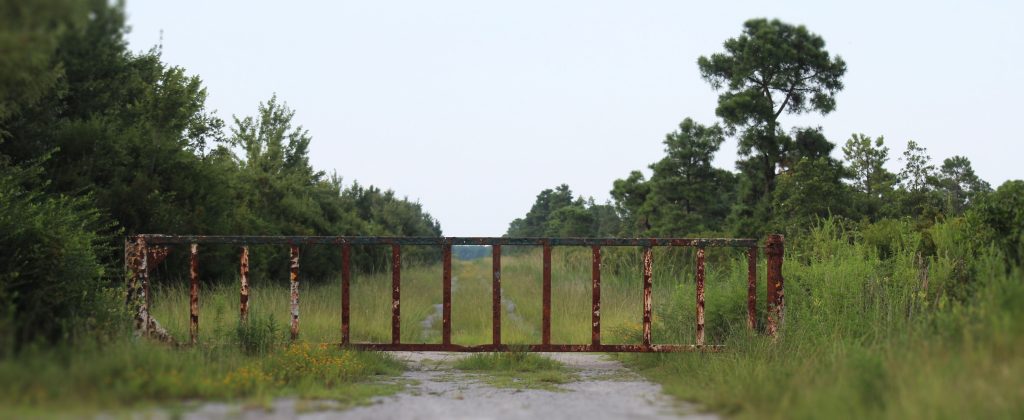
The new deadline to submit public comments on a proposal to rescind the “Roadless Rule” has been extended to Oct. 6, 2026.
Major federal actions are happening that are reshaping American’s public lands — the U.S. Forest Service began restructuring the agency this year; and the USDA proposed rescinding the Roadless Rule that protects 44 million acres of National Forest land from “broad prohibitions on road construction, road reconstruction, and timber harvesting within inventoried roadless areas;” and the Forest Service also initiated an environmental impact statement and rulemaking to change the existing Travel Management Rule.
The U.S. Department of Agriculture’s Forest Service announced on March 31, 2026, that it would “begin a sweeping restructuring of the agency to move leadership closer to the forests and communities it serves,” according to a press release.
Four months later, they announced, “Beginning Aug. 7, the Croatan Ranger District Office will permanently close as North Carolina Department of Transportation begins its US 70 widening project. Until construction of the new Croatan Ranger District is complete, visitor services will operate from the Croatan Work Center, located directly behind the former office. Recreation passes will not be available until Aug. 17 and will be issued from the Croatan Work Center beginning that day. Thank you for your patience as we transition to our new facility. We look forward to welcoming you to the new Croatan Ranger District Office in late summer.”
Agriculture Secretary Brooke Rollins filed a proposal on Aug. 18 to rescind the 2001 Roadless Area Conservation Rule which currently protects 44 million acres of the 193-million-acre National Forest System from commercial logging and new road construction. “The proposed rescission reflects the administration’s commitment to return authority to local line officers and ensure they have the tools needed to restore forest health and productivity…,” according to the press release. The public comment period on the decision to rescind the rule has been extended to October 6, 2026, according to the Federal Register.
The Forest Service also initiated an environmental impact statement and rulemaking to change the existing Travel Management Rule, as noted here.
What does this mean for local inventoried roadless areas in the Croatan National Forest?
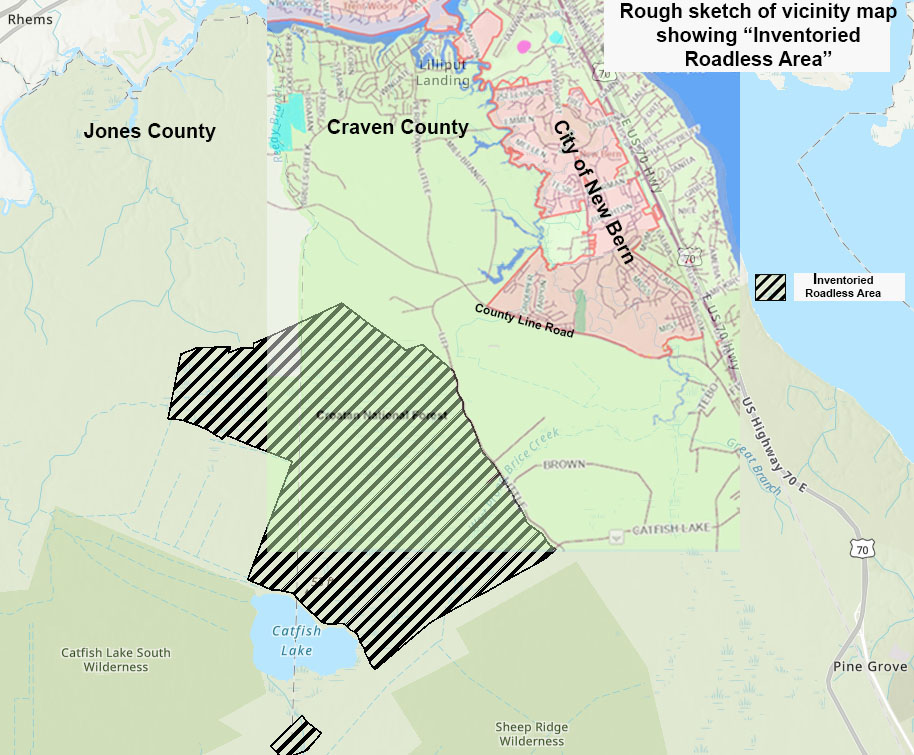
For demonstration purposes, the rough sketch below shows two inventoried roadless areas that’s adjacent to Catfish Lake in Craven and Jones counties. The map of all inventoried roadless areas in National Forests across America can be found here.
Wildlife and habitat
Threatened and endangered species will be impacted, and habitats will be disrupted nationwide if the inventoried roadless areas are opened up to align with “Executive Order 14192, Unleashing Prosperity Through Deregulation, to alleviate unnecessary regulatory burdens, Executive Order 14225, Immediate Expansion of American Timber Production, Executive Order 14154, Unleashing American Energy, and Executive Order 14153, Unleashing Alaska’s Extraordinary Resource Potential.”
On Aug. 19, a black bear traveled down Catfish Lake Farm Road (adjacent to an inventoried roadless area) and we wondered if it was from the same bear we saw on the road five years ago (below video).

Water
Electricity
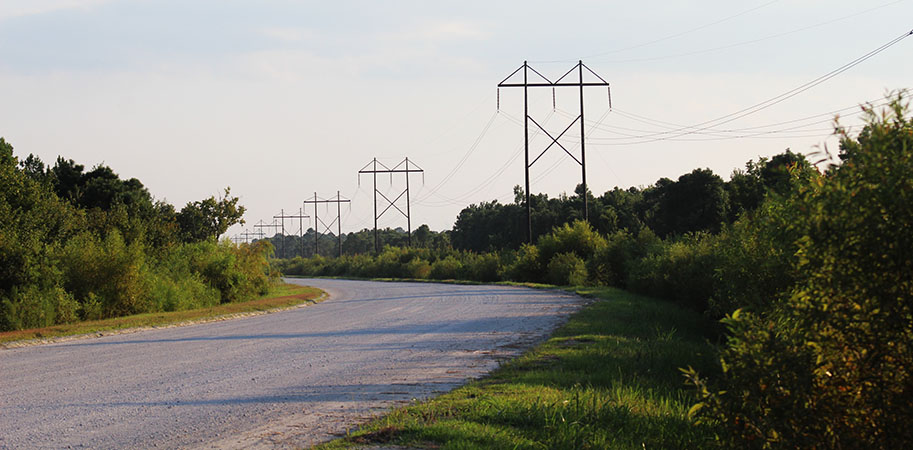
In June, the New Bern Board of Aldermen talked about the possibility of changing wholesale power supply providers, servicing customers in Hunters Ridge and Perrytown areas, and data centers during their retreat, as reported here. There was also a brief discussion about taking over Duke Energy Progress’s powerline through a little bit of the (Croatan National) Forest.
In July, they talked about rescinding a burn permit from a developer who was clearcutting land on County Line Road after receiving complaints of smoke and issues with air quality. Local and state officials have not confirmed or denied plans to pave County Line Road.
Recreational, ecological, economic, and social impacts
According to Pew Charitable Trusts, “By retaining intact backcountry forests, the rule supports a wide range of recreational, ecological, economic, and social values. The policy’s approach has been recognized by scientists and lawmakers from both sides of the political aisle, and has been upheld by the courts, as an effective way for the Forest Service to achieve its congressionally mandated ‘multiple use, sustained yield’ mission.”
“The rule provides flexibility by allowing for vegetation management projects (including cutting down trees) when needed to reduce wildfire risk to communities or to restore ecosystem functionality. This flexibility is demonstrated by the approximately 2 million acres of inventoried roadless areas that have already been treated to reduce wildfire risk and the similar use of treatment types, such as prescribed fire and mechanical thinning of trees, occurring within both inventoried roadless areas and general forest areas. Additionally, the roadless rule allows roads to be constructed or repaired to protect public health and safety, and for accessing mineral or treaty rights.”
A little history
The Wilderness Act of 1964 established the National Wilderness Preservation System and authorized Congress to designate wilderness areas.
The Pamlico News reported in 1978, “We now have RARE II (Roadless Area Review and Evaluation) information. Areas affected by the study and proposed as additions to the National Wilderness Preservation System included Mattamuskeet, Cedar Island, Pea Island, and the Pocosin, Sheep Ridge, Pond Pine, and the Catfish Lake areas of the Croatan National Forest.” They asked, “What are the Feds up to this time?”
The 2001 Roadless Area Conservation Rule was enacted which preserved all roadless areas and allowed for timber harvesting and road construction only in exceptional circumstances, such as reducing the risk of wildfires.
Learn more about the Croatan National Forest here.
We reached out to the USDA for comment but have not received a response by press time.
Editor’s note: The article was updated to reflect the new deadline for public comments on the decision to rescind the Roadless Rule.
By Wendy Card, editor. Send an email with questions or comments.